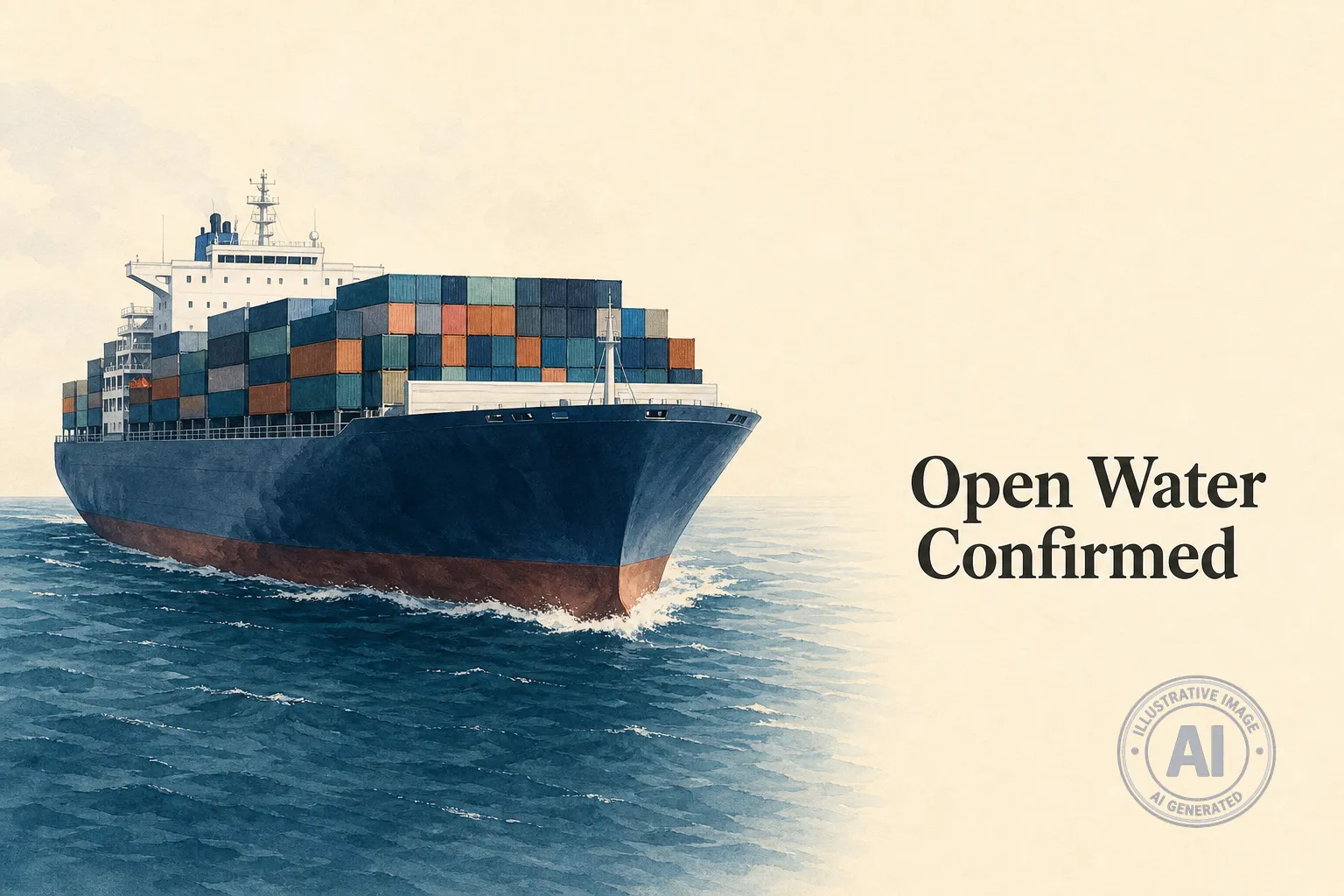
Rankin Inlet, Nunavut, and surrounding Kivalliq communities can expect smooth sailing for their annual sealift resupply, as the U.S. National Ice Center and Environment Canada’s Canadian Ice Service report Hudson Bay is essentially ice-free in mid-August 2026. Both Northern and Central Hudson Bay are confirmed clear of ice, while Southern Hudson Bay has mostly open water with only a strip of first-year ice along the western shoreline. This means cargo ships can navigate without icebreaker support, which is critical for delivering goods before the fall freeze-up.
The timing is ideal for sealift operations. Gardewine lists September 3, 2026, as the Port of Churchill terminal cutoff for the third sailing to Arviat, Chesterfield Inlet, Coral Harbour, Rankin Inlet, and Whale Cove. That date represents the last chance for many bulk supplies, vehicles, and construction materials to arrive by sea this year. With open water confirmed now, vessels have a reliable window to load in Churchill and make the run north.
This year’s ice-free conditions follow a record-breaking winter. Arctic sea ice reached a record-low maximum extent of 14.29 million square kilometres on March 15, 2026, statistically tying with (and narrowly below) 2025’s previous record low since satellite monitoring began in 1979. Hudson Bay and the Canadian Arctic archipelago both saw their lowest ice coverage on record for that date. Long-term trends show the bay has gained about 40 extra ice-free days over the past four decades, with breakup happening earlier in spring and freeze-up arriving later in fall.
For Rankin Inlet, a community of about 3,379 people and the transportation hub for the region, open water is more than a weather report. The community has no road link to southern Canada. Everything from fuel and food to building supplies arrives by ship during the short summer season or by air at much higher cost. The Kivalliq Road Project, a proposed 725-kilometre all-weather road connecting Arviat, Whale Cove, Rankin Inlet, Chesterfield Inlet, and Baker Lake, remains in planning stages. Until that road becomes reality, marine shipping is the region’s lifeline.
The extended ice-free period also raises concerns. Polar bears that depend on sea ice for hunting seals have less time on the ice each year, and traditional travel routes used by Inuit hunters are changing. For now, however, the immediate news is good for communities awaiting their annual cargo. Calm, open water means ships can move on schedule, and goods should arrive before the next freeze begins.