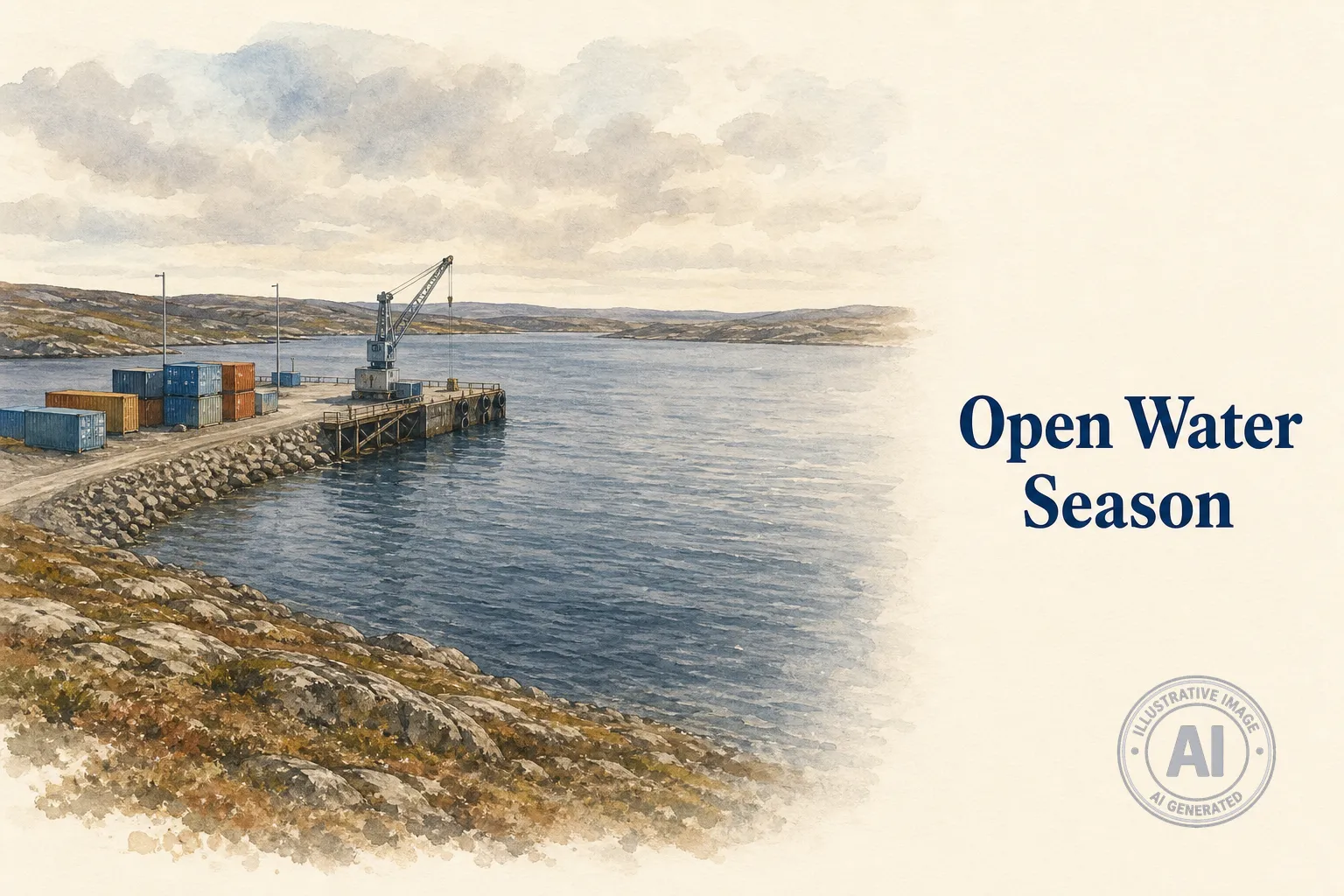
Hudson Bay near Rankin Inlet is largely free of ice in early June 2026, marking the start of the summer open-water season. The Canadian Ice Service, part of Environment Canada, reports that its Northern Hudson Bay chart was last updated on November 28, 2025, during the winter freeze-up; the region has since transitioned into its annual summer melt cycle. Meanwhile, the Hudson Strait chart was issued just this morning, showing typical eastward ice retreat.
This ice-free condition is normal for this time of year. Historically, ice in the bay begins to retreat in May and often melts out completely by July. Since the 1970s, however, breakup has been happening earlier, especially in the western part of the bay where Rankin Inlet sits. The trend has extended the open-water season, giving boaters and supply ships a longer window on the water.
For the hamlet of about 3,000 people, marine access is a lifeline. Rankin Inlet has no all-season road, so it relies on air transport and seasonal sealift for everything from fuel to food. The sealift typically runs from July to October, but clear waters in June mean safe passage for smaller craft and an early start for marine operations tied to the Port of Rankin Inlet.
Mariners are being advised that while ice is not a concern, fog can be. As warm air moves over the colder water, fog becomes most frequent in June, July, and August. The Canadian Ice Service says no ice hazards are present, but visibility could challenge smaller vessels.
The open water also supports activity around the Meliadine Gold Mine, operated by Agnico Eagle since 2019. The mine depends on the bay for supplies and is a key driver of local maritime traffic. With the ice gone, that work can move ahead safely.