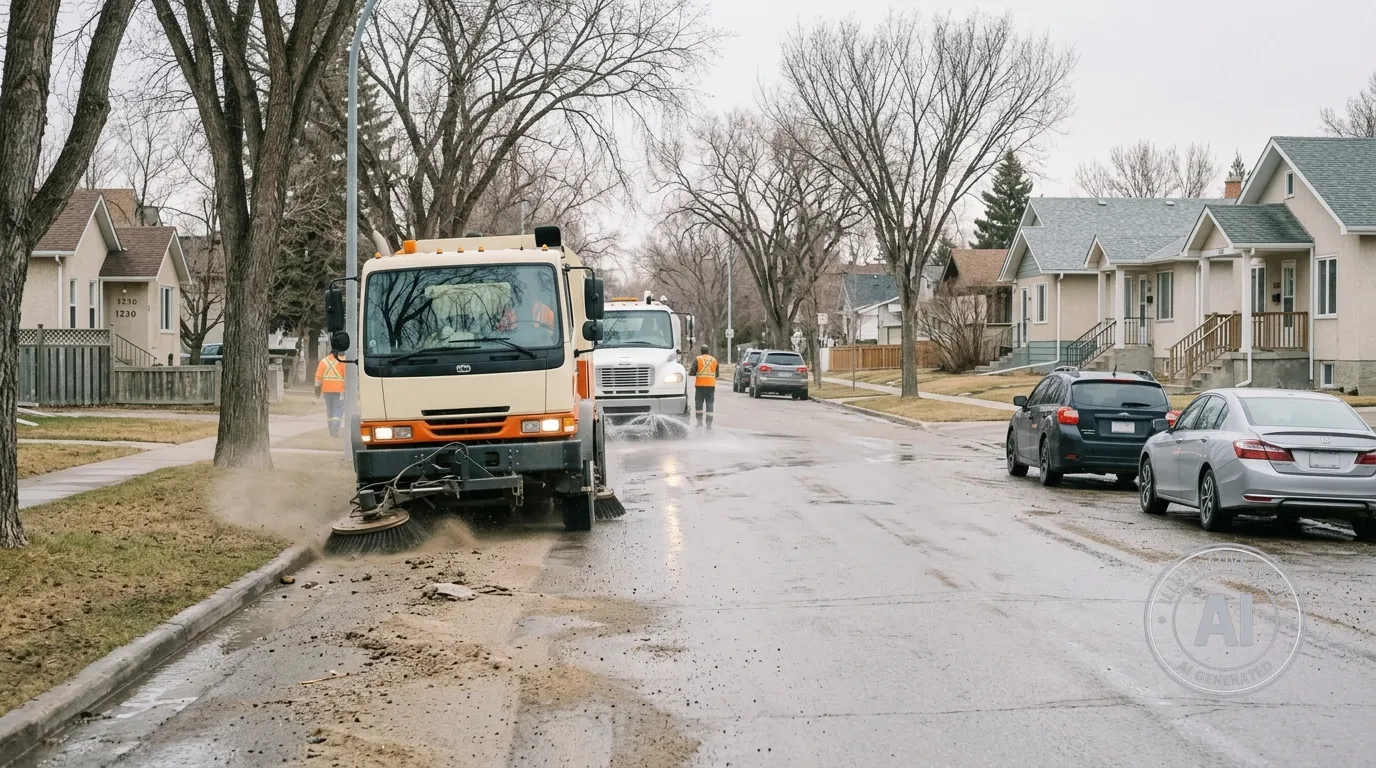
The City of Regina is currently moving through its annual spring street sweeping program, a 10-week effort to clear away winter sand and debris from city streets and boulevards. The cleanup began on March 30, 2026, and is expected to continue until early June, depending on the weather.
The program is divided into two phases to manage the massive amount of material left over from the winter months. Phase one, which is underway, focuses on cleaning major arterial roads such as Albert Street and Lewvan Drive, as well as high-density areas like Harbour Landing, the General Hospital area, Downtown, and Cathedral. Once these areas are cleared, crews will move into phase two in late April to address residential streets city-wide.
To perform the work effectively, the city is using a fleet of water trucks to reduce dust, alongside sidewalk machines, sweepers, and dump trucks. This work is essential to keep winter sand out of the storm sewer system, which helps prevent clogged drains and potential flooding while protecting local waterways.
Residents are being asked to help by moving their vehicles off the street when crews are working in their neighbourhoods. Parking in restricted zones during sweeping operations carries a risk, as vehicles may be ticketed $120 and towed to allow for a full cleaning of the road. Residential sweeping typically occurs Monday through Friday between 4 a.m. and 10 p.m.
To check when cleaning is coming to a specific street, residents can use the free Sweep&Plow mobile app or visit the city website to look up their neighbourhood schedule.