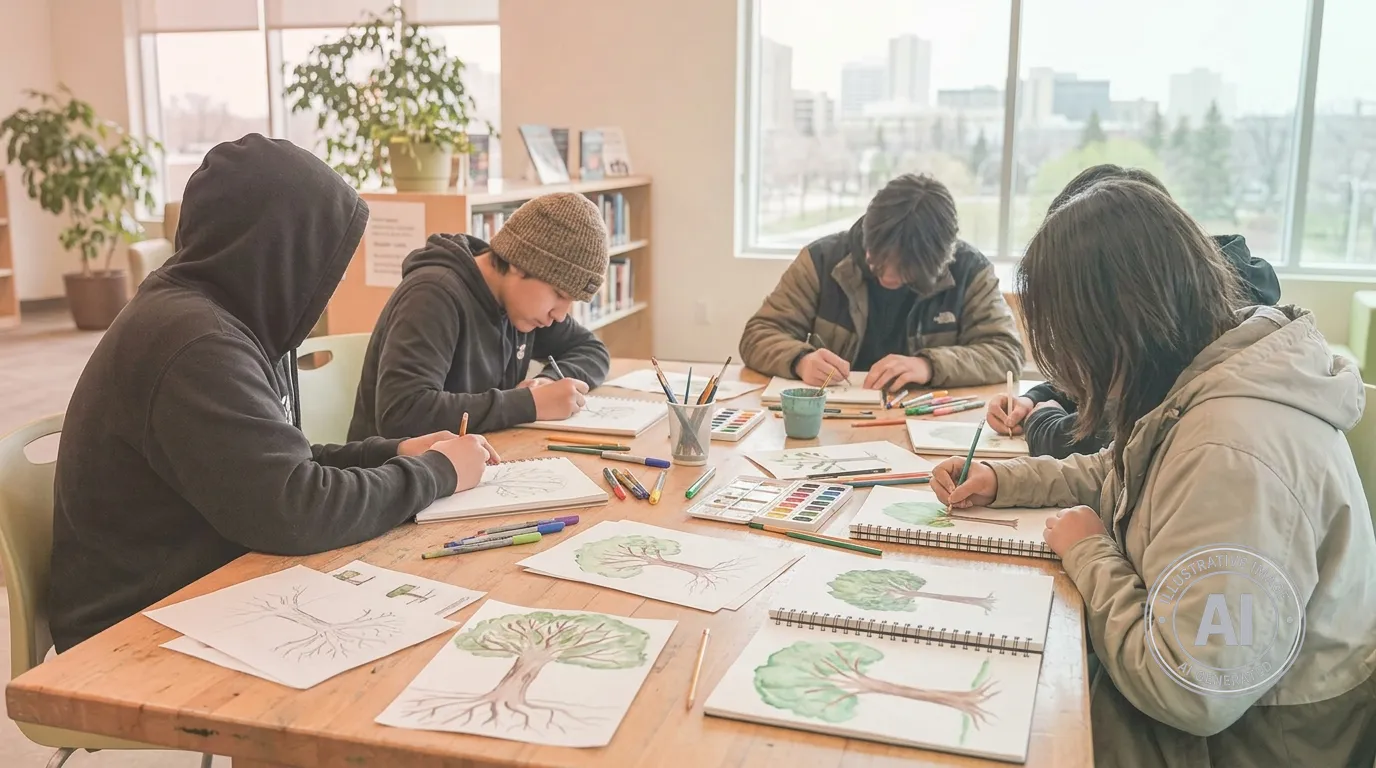
Indigenous youth in Regina have until April 12, 2026, to submit their original artwork for a chance to win up to $1,000 in a contest focused on the city’s urban forest. The City of Regina is inviting young artists between the ages of 12 and 20 to create a Tree of Life design that will eventually serve as the official visual symbol for the local long-term plan to protect and grow the city’s tree canopy.
The winning design will be featured in the Urban Forest Management Plan, appearing in the final policy document, as well as in public presentations, educational materials, and community programs. This strategy, which focuses on protecting and planting trees across the city, is guided by the concept of wîhci-atoskêwin askîhk, or living on the land in harmony.
Eligible youth who attend or participate in programs at Regina-based educational institutions may submit their work until 11:59 p.m. on April 12. A panel including Elders, Knowledge Keepers, and city staff from Parks and Open Space Services and Recreation and Cultural Services will review all entries. Prizes for the contest include $1,000 for first place, $700 for second, $500 for third, and two $250 youth recognition awards.
This initiative is part of the city’s broader commitment to reconciliation and the Truth and Reconciliation Commission’s Calls to Action. By centering Indigenous perspectives and relationships to the land, the project aims to honour the spirit of the territory and strengthen community connections. The city, which is located in Treaty 4 Territory, acknowledges the Cree, Saulteaux, Dakota, Lakota, Nakota, and Métis Nation in its work.
The art contest builds on other municipal reconciliation efforts, such as the Indigenous Artist in Residence program, which has been in place since 2022. According to city officials, creating space for Indigenous artists to share their stories and knowledge is a vital part of supporting ongoing healing and cultural presence in the region.