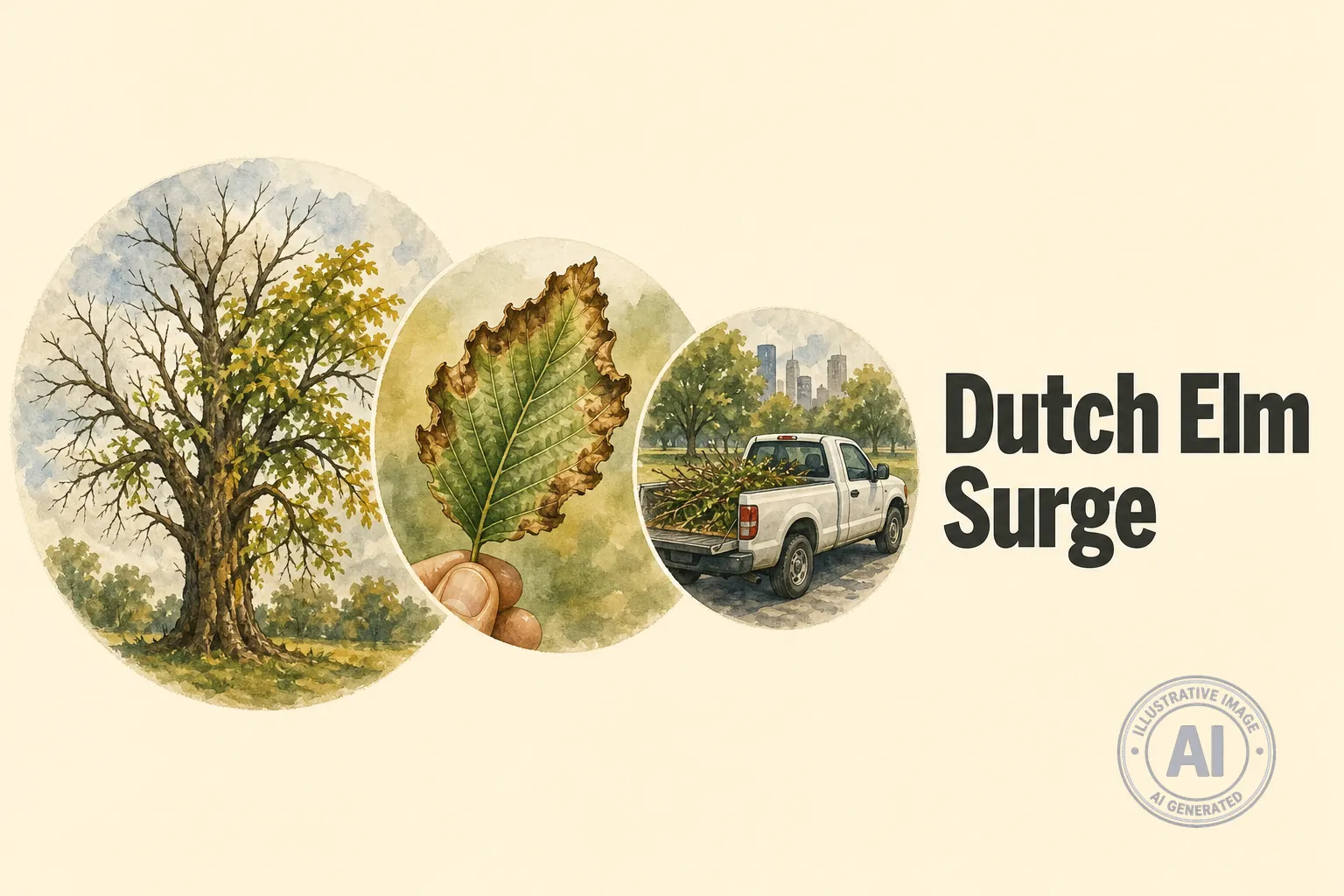
The City of Regina has confirmed 26 cases of Dutch elm disease so far in 2026, and infected trees have already been removed to stop the fungus from spreading. The count as of July 15 is on pace with last year, which ended with a near-record 87 cases.
Ashley Thompson, manager of parks technical services for the city, said the 2026 number is right where it was at this point in 2025. She expects this year’s total will likely end up similar to the last two, with the disease now firmly established in the city. Regina saw just 24 cases in 2023 before the situation exploded to 84 in 2024 and 87 in 2025, according to the city’s official tally. (Some media reports cited 85 cases for 2024 based on earlier comments from city officials.)
Elms make up 36 per cent of the roughly 180,000 city-owned trees in Regina, so the financial hit is big. The city says removing a single diseased tree costs anywhere from $1,000 to $10,000, depending on its size. Those costs are covered by the forestry budget.
Milder winters and wetter springs, linked to climate change, are believed to be driving the increase, as the beetles that carry the fungus survive better and the fungus itself grows more easily. Dutch elm disease can also spread through interconnected root systems between closely planted trees, which is a known risk in older neighbourhoods with dense, mature elm plantings.
To help slow the spread, the province bans pruning elms from April 1 to August 31, when the beetles are most active. It is also illegal to store, transport, or use elm wood for any purpose under Saskatchewan’s Dutch elm disease regulations. The city is asking any resident who spots a tree with leaves that wilt, turn yellow, or drop early—often a first sign of trouble—to report the suspected case. Free testing is available through the Ministry of Agriculture’s crop protection lab.
Dutch elm disease was first found in Regina in 1981, and for decades cases stayed low. But with the dramatic jump in the last few years, the city says the battle has entered a new, more costly phase.