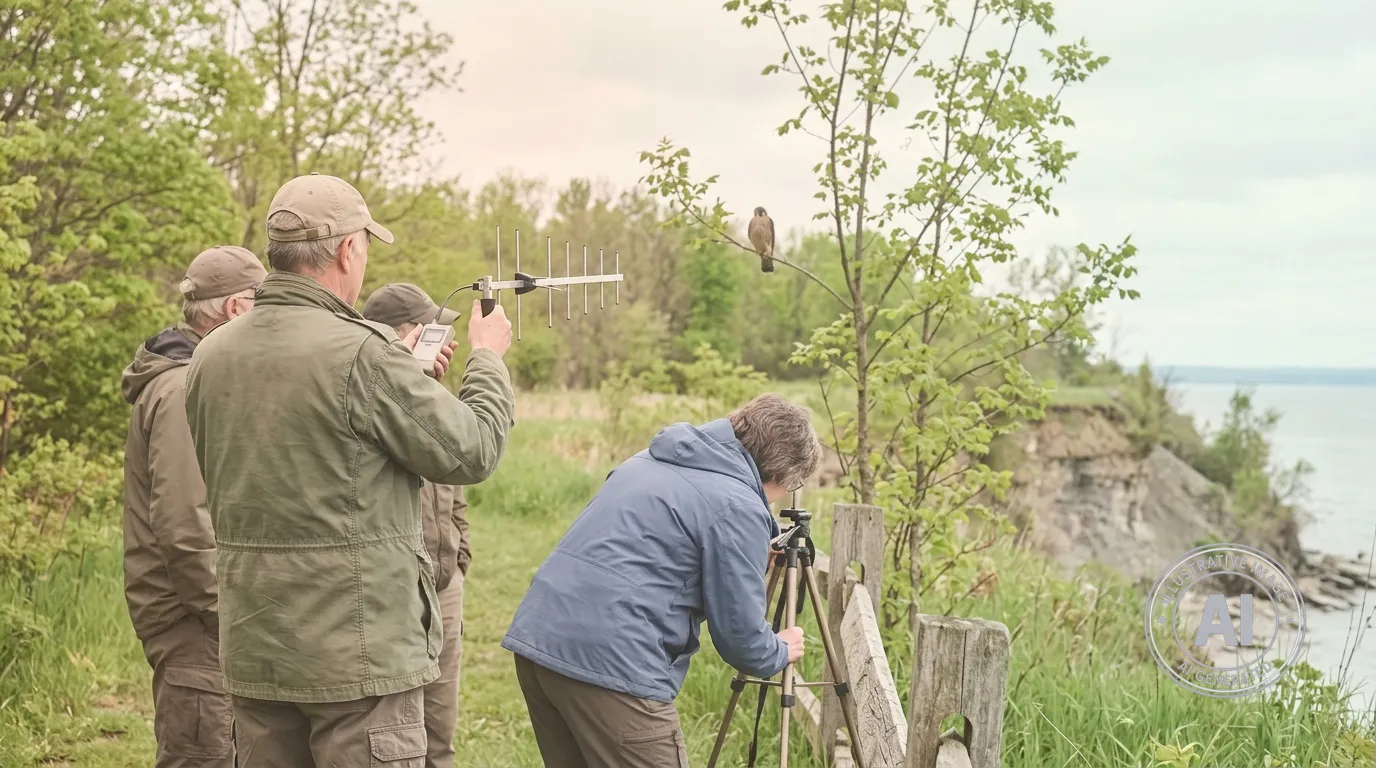
The Hawk Cliff Raptor Banders, a volunteer group based in St. Thomas, Ontario, has launched a new research project to protect the American Kestrel, a small falcon experiencing significant population declines. During a community presentation held on April 16, 2026, the group announced they are now using the Motus Wildlife Tracking System to tag the birds and better understand why their numbers are falling.
The project uses advanced radio technology coordinated by Birds Canada to track the movement of the falcons. Research indicates that American Kestrel populations have dropped by nearly 50 per cent across North America since the 1960s, with some local areas seeing declines as high as 93 per cent. Experts believe several factors may be driving this trend, including habitat loss from urban sprawl, intensive farming practices, the use of pesticides, and increased predation by Cooper’s Hawks.
In addition to the new kestrel initiative, the volunteer group reported recent success closer to home. Working with city staff, including Todd Sawyer from the City of St. Thomas Parks Department, the banders successfully tagged three Osprey chicks at Lake Margaret. This work is part of a long-standing tradition for the group, which has operated at Hawk Cliff near Port Stanley since 1969 and has tagged more than 78,000 raptors over the decades.
The announcement comes during a challenging time for local conservation efforts. Analysis by team member Catherine Manschot shows that raptor capture rates at the cliff have been cut in half over the last 20 years. Furthermore, the 2025 season saw only 791 raptors captured, marking the lowest count since 1971. The group attributes this decline in successful bird sightings to climate change, which has altered traditional wind patterns and pushed migrating raptors away from their usual paths along the cliff.
Despite these difficulties, the banders continue to operate six monitoring stations in the area, committed to gathering data to better understand the changing migration patterns and survival of local birds of prey.