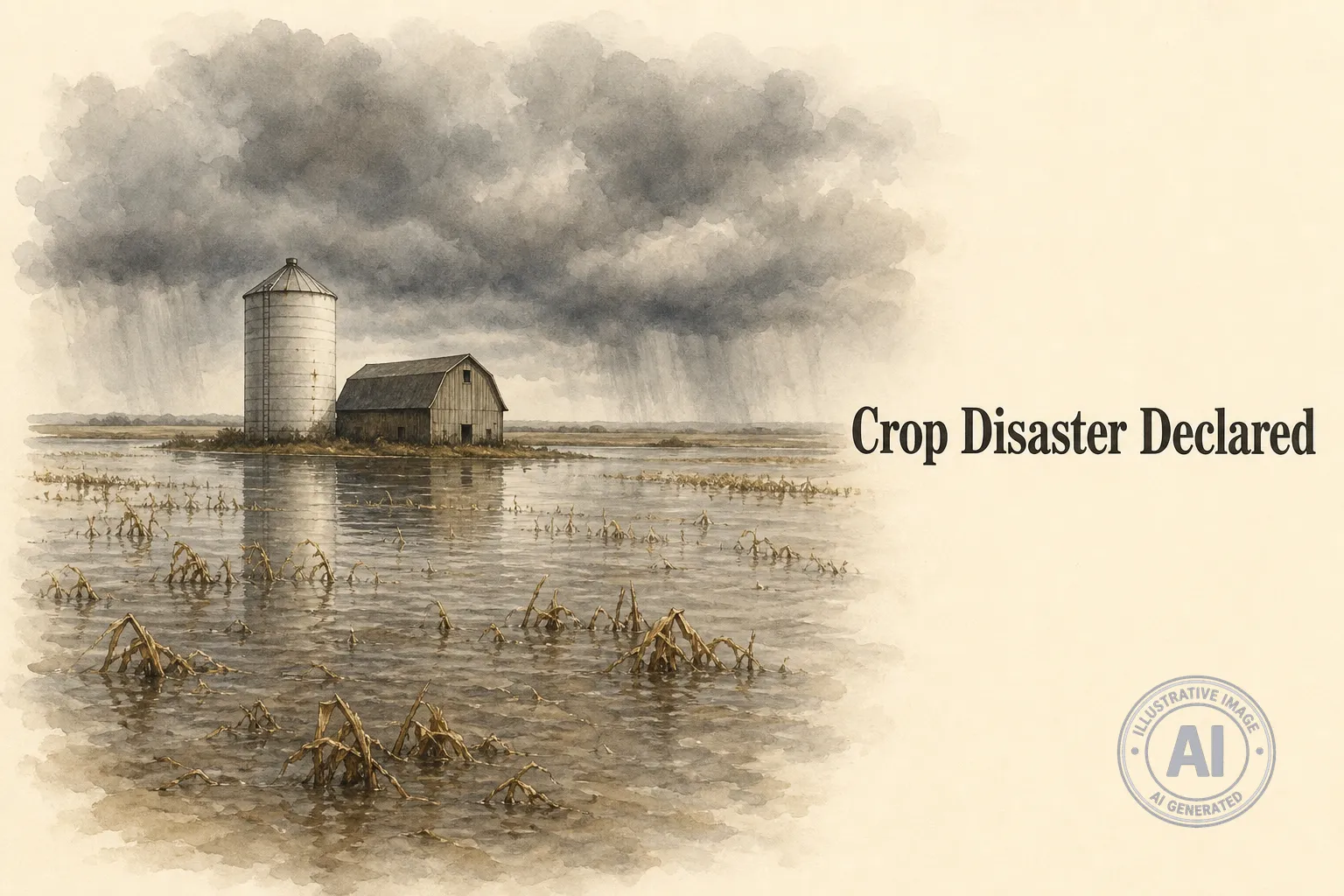
Westlock County, Alberta, has declared a State of Agricultural Disaster after months of excessive rain left fields underwater and crops struggling. County council made the declaration at a July 14, 2026 meeting, hoping to get the attention of provincial and federal governments about the tough conditions local farmers are facing.
According to the Westlock County Agriculture Services, the relentless moisture has caused saturated soils, drowned-out crop acres, forced heading in grain crops, and hay and silage production well below normal. The move is meant to raise awareness, not trigger automatic funding. “A declaration of agricultural disaster does not automatically result in additional funding programs, provincially or federally,” the county said. “It does raise awareness to governments of the challenges local producers face, which could lead to some form of support and assistance.”
Farmers who have crop losses or reduced yields are being told to contact the county’s Agricultural Services department for help finding available resources. The Agriculture Financial Services Corporation (AFSC) notes that excess moisture and flooding are insured perils under its crop and hay insurance programs, with payouts based on a per-acre benefit. There is also an Unseeded Acreage Benefit for land that was too wet to plant. Earlier this year, AFSC extended seeding dates in the North East, North West, and Peace regions because of above-average April snowfall, prolonged winter conditions, and ongoing spring rainfall, a sign that the season was off to a rough start from the beginning.
Reeve Christine Wiese leads the seven-member council that made the declaration. Councillor Ray Marquette also serves on council. The county’s Agricultural Service Board, which guides the agriculture department, will keep working under provincial rules for weed control, pests, soil conservation, and livestock disease.
Just days after Westlock’s move, neighbouring Thorhild County declared its own agricultural disaster on July 17, with the county’s agricultural administration estimating up to 50 per cent crop yield loss from flooding. The back-to-back declarations show how northern Alberta’s farm country is reeling from too much water, even as southern parts of the province cope with severe drought. The county said the message to upper levels of government is simple: local producers need help, and they need it soon.
Farmers in Westlock County can reach out to Agricultural and Environmental Services Coordinator Sami Siegle or Assistant Agricultural Fieldman James Breadon for guidance on what support exists right now.