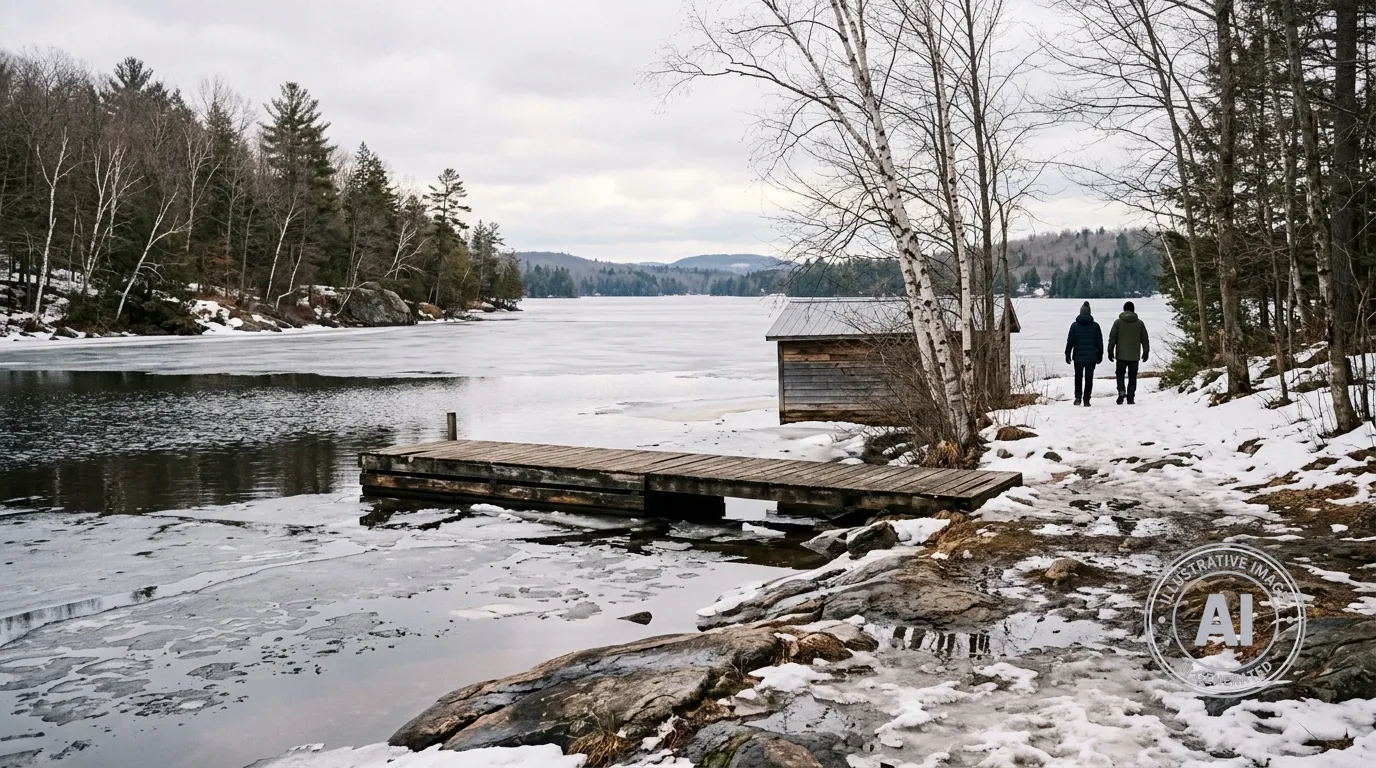
The Muskoka Watershed Council is highlighting shifting environmental patterns in the region, noting that recent temperature trends are changing how residents experience the transition to spring.
In a column published April 4, 2026, Dr. Peter Sale, a resident of Bracebridge and a director with the volunteer-driven organization, points out that the last 11 years have been the warmest on record since weather data began being collected. Climate scientists have observed that Canada is warming at approximately twice the global average rate, a trend that is already having tangible effects on the local Muskoka landscape.
One of the most visible changes is the decline in winter ice coverage on local lakes. Over the past several decades, the duration of ice on these lakes has decreased by approximately 20 days. This reduction in frozen water coverage has significant ripple effects, impacting everything from winter recreation and tourism to the construction industry and the natural dynamics of the lakes themselves.
These observations align with findings from the 2023 Muskoka Watershed Report Card, which categorized the local watersheds as being at a crucial turning point. While the watersheds remain healthy, the report indicates they are gradually degrading in several ways. The council notes that existing management systems appear insufficient to halt or reverse this negative trend.
As the region moves into the spring thaw, the council continues to monitor the intersection of these warming trends and seasonal flood risks. Spring flooding is often influenced by a combination of factors, including the depth of the snowpack, how rapidly temperatures rise, and the timing of rainfall during the melting period. By analyzing these long-term climate changes, the council aims to provide residents with a clearer understanding of the environmental shifts occurring throughout the Muskoka River watershed.