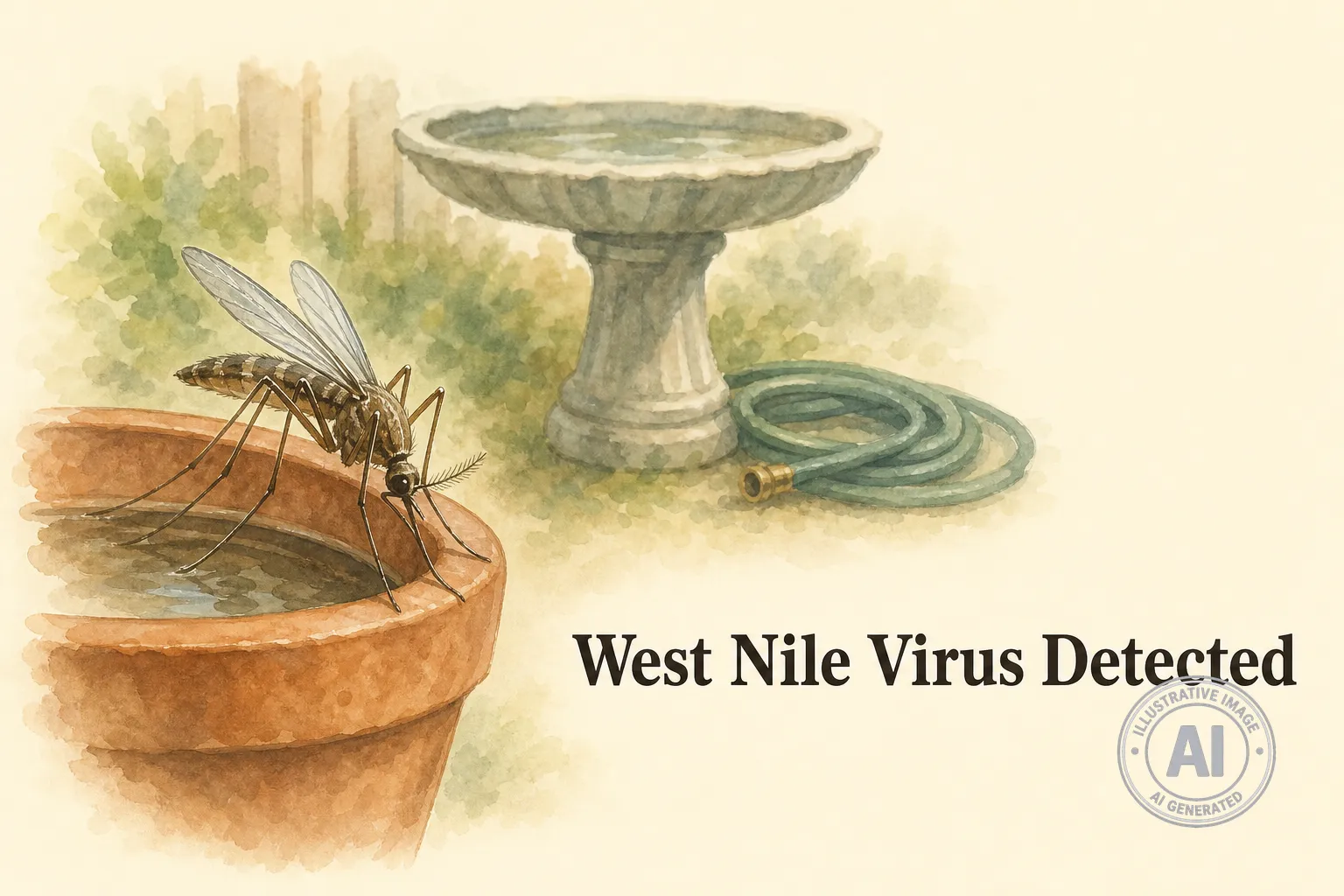
A batch of mosquitoes trapped in Halton Region last week has tested positive for West Nile virus, marking the first detection of the year. Halton Region Public Health confirmed the finding on July 2, 2026, following routine surveillance during the week of June 29.
This is an early appearance for the virus, which typically shows up later in the summer. Dr. Deepika Lobo, Halton’s Commissioner of Health and Medical Officer of Health, is overseeing the region’s annual larviciding program, which runs from May 11 to October 31 and targets standing water across Burlington, Oakville, Milton, and Halton Hills.
Urban spots like Milton are especially vulnerable because the type of mosquito that spreads the virus breeds in small amounts of still water. Common household items such as bird baths, plant pots, old toys, and tires can become breeding grounds.
Health officials recommend wearing long sleeves and using bug spray with DEET or Icaridin, especially around dusk when mosquitoes are most active. Most people infected with the virus show no symptoms, but roughly one in 150 can develop serious illness like brain swelling, and about 10 per cent of those severe cases are fatal. People over 50 and those with conditions like cancer, diabetes, high blood pressure, or kidney disease face a higher risk.
Last year, Halton logged 28 positive mosquito pools and eight confirmed human cases, including one death. Milton alone had eight positive pools and one human case. Across Ontario in 2024, there were 81 confirmed cases, making up nearly half of all locally acquired infections in Canada that year.
The region’s larviciding program uses products registered by the Pest Management Regulatory Agency to treat catch basins and other standing water sites. Residents can also help by draining any containers that collect water on their properties.