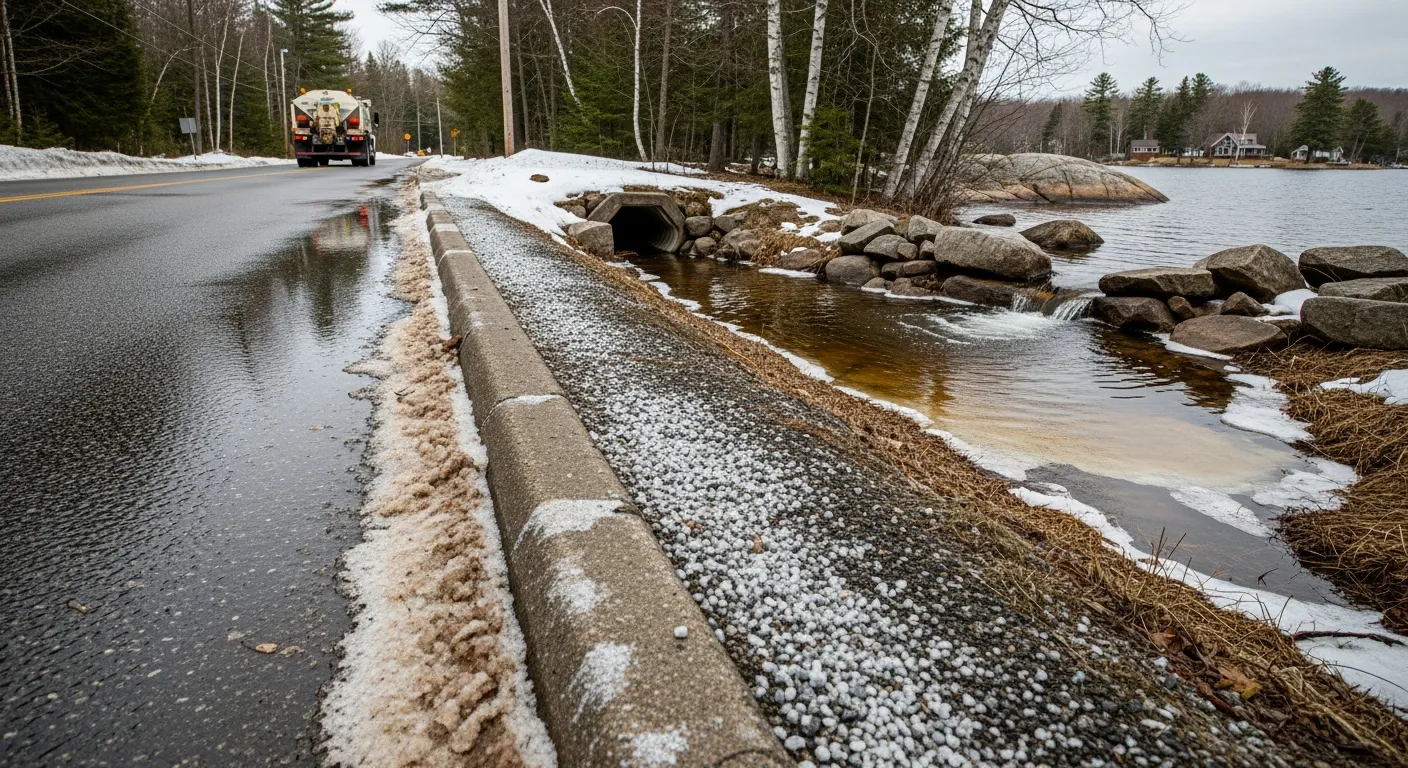
A March 2026 update from the Muskoka Watershed Council highlights that 71 per cent of monitored lakes in the Muskoka District, including those around Bracebridge, Ontario, have chloride levels exceeding natural expectations. This increase is a result of long-term road salt use and has led to persistent concerns about the health of local waterways.
Data from the 2023 Watershed Report Card reveals that 194 out of 274 monitored lakes exhibit these elevated salt concentrations. Approximately 24 per cent of these lakes are considered to have potentially toxic chloride levels, with 36 lakes reaching a point where damage to aquatic life is probable.
To address this, the Friends of the Muskoka Watershed expanded its “Salty Muskoka” project to reduce salt use while maintaining winter safety. Since March 2025, the group has engaged 41 public events, visited 77 small businesses, and worked with five local schools to share practical ways to use less salt.
By the end of 2025, all six local municipalities in the District of Muskoka passed resolutions to lower the amount of salt used on public roads. However, private contractors often continue to use high amounts of salt because they fear being sued for “slip-and-fall” accidents on commercial properties.
The District Municipality of Muskoka continues to monitor water quality to help protect the environment. Local advocates, including Dr. Neil Hutchinson, are calling for provincial legislative changes that would protect businesses from liability if they follow recommended salt-reduction guidelines.